Imagine a simple situation.
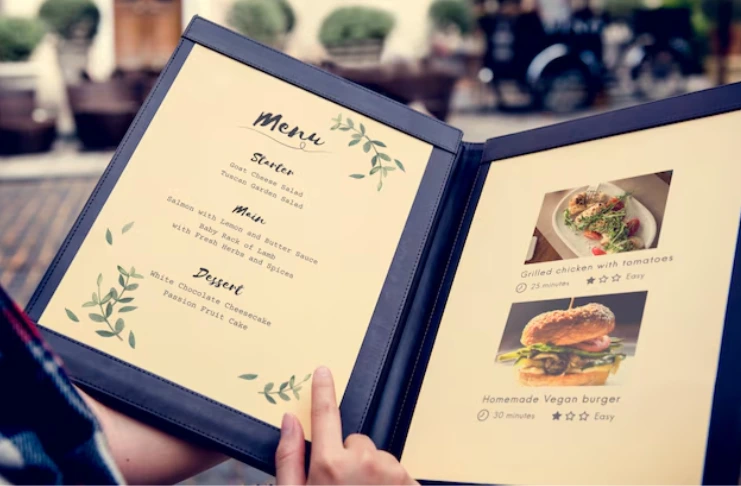
You open a restaurant menu and see pasta for €18, steak for €32, and a little lower on the page — lobster for €95.
Most likely, the lobster will not be ordered very often. Many guests will simply look at it, think “wow” for a second, and continue reading the menu.
But at that exact moment, the lobster has already done its job.
Because the steak for €32 no longer feels that expensive next to the lobster for €95. It feels normal. Even reasonable.
The guest is not choosing the cheapest dish, but also not going for something too expensive. They choose something in the middle — and feel calm about it.
And here, two things work at the same time.
First, our brain does not judge prices separately. It compares them. A price does not exist on its own. It always stands next to something else.
Second, many people feel psychologically more comfortable choosing the middle option. Not the cheapest one, because it may feel too simple. Not the most expensive one, because that feels risky. Something in the middle feels like the “right” decision.
That is why the most expensive dish on a menu often does not exist only to be sold by itself.
It can be an anchor. A comparison point. A detail that makes other dishes look more valuable, more logical, and more attractive.
Big Brands Do the Same Thing, Just in a Different Package
This method does not work only in restaurants.
Look at smartphones.
When a brand presents a very expensive top model, the basic model or the previous version suddenly does not feel that expensive anymore. A person may not buy the most expensive model, but its presence changes how they see the whole product line.
You look at the flagship model with a very high price, then look at the model just below it — and suddenly it feels like a smart purchase.
Even though a minute ago, that “smart purchase” may also have felt expensive.
It is the same comparison.
An expensive option creates the background. And against that background, other options feel softer.
You can see similar logic in coffee shops when there are several drink sizes. The small one may feel like poor value, the large one may feel like too much, and the medium one almost chooses itself.
Or in subscription services. There is a basic plan, a very expensive maximum plan, and between them — the exact plan the company actually wants to sell. And it looks like the most balanced option.
In a restaurant, it can be pasta, steak, and lobster.
In technology, it can be the basic model, Pro, and Pro Max.
In coffee, it can be small, medium, and large.
The form is different. The principle is the same.
People do not just buy a product. They buy the feeling that they made the right choice.
A Good Menu Is When the Restaurant and the Guest Understand Each Other
A guest wants to feel that they are not overpaying for no reason.
A restaurant wants to sell not only the cheapest dishes, but also the dishes that bring a healthy profit.
The ideal situation is when both sides are satisfied.
The guest pays more, but understands what they are paying for.
The restaurant earns more, but does not lose trust.
That is the real foundation of loyalty.
There is another situation with guest categories such as tourists. Here, it is important for every restaurant to know which countries its visitors come from and which languages they speak. At the same time, international guests should be able to check whether the restaurant can provide information about dish names and descriptions in a language they understand.
This is why we create multilingual menus for venues and restaurants, so guests from different countries do not have to guess, but can consciously choose dishes, understand their value, and feel confident before ordering.